Local search can feel like a secret club. If you’re not showing up in the local pack, customers never find you. In 2026 the rules have shifted: AI now reads your Business Profile, mobile users dominate, and reviews still carry huge weight. In this guide we’ll walk through every action you can take to boost your local visibility, from the profile you claim to the backlinks you earn.
By the end you’ll have a clear, repeatable process you can follow each week. We’ll also point out where a partner like Long Weekend can take the heavy lifting off your plate.
Step 1: Claim and Optimize Your Local Business Profile
First, make sure you own your business profile. If you skip verification, you’re invisible to the map pack. Claim it by searching your business name on a map service, clicking “Claim this business,” and following the prompts. Once verified, fill out every field.
The local ranking model still leans on relevance, distance, and prominence, but in 2026 prominence now hinges on real‑world engagement. Photo views, review reads, Q&A activity, and direction requests all add to a “popularity score.” The more people interact with your profile, the higher you climb.
Here’s a quick priority list:
Primary category: Choose the most specific one. If you’re a bakery, pick “Bakery” instead of the broader “Food.” Add secondary categories for services like “Custom Cakes.”
Complete attributes: Fill out hours, holiday schedule, payment methods, accessibility options, and any service‑area details.
Photos: Upload at least 20 high‑quality images – interior, exterior, team, products. Statistics show that listings with 100+ photos get far more direction requests.
AI‑generated Q&A: The platform now drafts answers to common questions. Review them weekly, edit any errors, and seed questions that highlight your strengths.
Posts: Use the native scheduling tool to share offers, events, or blog snippets. Consistent posting signals activity to the AI.
Because AI pulls data from the fields you fill, every detail matters. For example, adding “outdoor seating” in the amenities section can surface your restaurant when someone asks “best patio near me.”
We also recommend monitoring the “Performance” tab for clicks, calls, and direction requests. Those numbers tell you which parts of your profile are driving traffic.
And don’t forget to link your profile to your website’s schema. A simple <script> tag with LocalBusiness markup helps search engines match your profile data to your site.
Long Weekend’s team often audits profile setups for our clients, catching missed attributes that can cost clicks.
Businesses that regularly update their Q&A and post schedule see a 12% lift in local pack impressions.
Key Takeaway: A fully completed profile with fresh photos, accurate attributes, and weekly AI‑Q&A checks is the foundation of local SEO in 2026.
Step 2: Ensure Consistent NAP Citations Across Directories
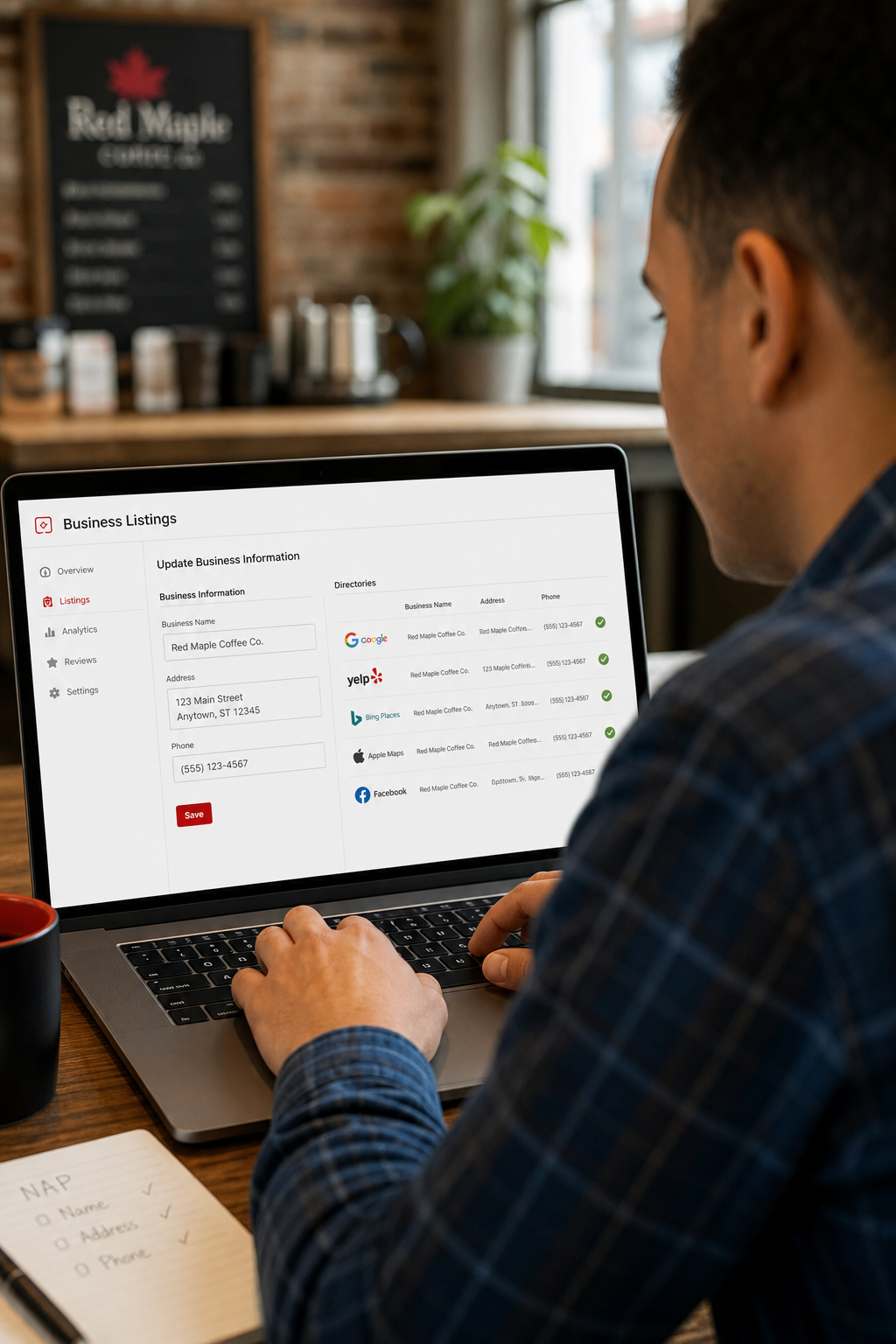
Your business name, address, and phone number , the NAP , must match everywhere online. Search engines treat even a period difference as a separate entity, which can dilute your authority.
Start by creating a master spreadsheet with the exact NAP format you want to use. Then audit the top local citation sites: major review sites, search engine business directories, mapping services, industry‑specific directories, and local chambers.
When you add a new listing, double‑check spelling, punctuation, and phone formatting. If a site forces you to omit a suite number, add it in the address line field if possible, or leave a note for future correction.
After you’ve claimed each profile, use a dedicated citation audit tool to run a citation audit every quarter. The tool will flag inconsistencies so you can fix them quickly.
Don’t create duplicate listings. Search for your business name on the directory before you add a new one. If a duplicate exists, claim it and merge the data.
Consistency also matters for schema on your own site. Your<meta>tags and JSON‑LD should reflect the same NAP you use elsewhere.
Here’s a short checklist you can run each month:
Verify that the NAP on your website matches your local business profile.
Scan the top 20 citation sites for your business name.
Update any mismatched entries.
Log changes in your master spreadsheet.
Keeping NAP tight helps search engines trust your location signals and improves the “distance” factor in the local algorithm.
When you finally line up every listing, you’ll notice a smoother flow of direction requests and a clearer signal to local search engines that you’re the same business everywhere.
Step 3: Build and Manage Local Reviews
Reviews are social proof and a ranking factor. Search engines still look at quantity, quality, recency, and relevance. A steady stream of 4‑ and 5‑star reviews tells the algorithm you’re active and trusted.
Ask for reviews at the moment of peak satisfaction , right after a purchase, a service call, or a successful project hand‑off. Make it easy: send a short link from the “Ask for reviews” button in your business profile, or embed a QR code on receipts.
Don’t chase reviews with incentives. Search engines can penalize that behavior. Instead, train staff to request reviews naturally. A simple “If you enjoyed our service, could you share a quick review?” works.
Once reviews start coming in, respond to each one within 48 hours. A friendly thank‑you on a 5‑star review reinforces goodwill. On a 1‑star review, acknowledge the issue, apologize, and invite the customer to discuss offline. That public response shows future visitors that you care.
Use the Long Weekend review calculator to estimate how many new 5‑star reviews you need to reach a target rating. The tool can help you set realistic weekly goals.
Platform guidelines also let you flag reviews that violate policies , spam, off‑topic, or conflict of interest. If a review is clearly fake, report it; a removal can boost your average rating.
Here’s a quick workflow:
Identify the transaction moment for review request.
Send a personalized short‑link via SMS or email.
Log the review in a spreadsheet.
Reply publicly within 48 hours.
Flag any policy‑violating reviews.
For more on how reviews impact rankings, see a search engine's own help page about local ranking factors and a third-party analysis that breaks down quantity vs. quality.
Pro Tip: Rotate a set of three pre‑written thank‑you replies so each review feels personal, not canned.
Step 4: Create Locally Relevant Content
Content that speaks to the people in your town signals relevance to search engines. Think beyond generic blog posts , create landing pages for each city, neighborhood, or service area you serve.
Start with a keyword map. Use tools like a keyword research tool to find “near me” queries: “best plumber in Cleveland,” “organic coffee shop Oakwood,” etc. Sprinkle those phrases naturally in titles, headings, and meta tags.
Each local page should include:
A unique H1 that mentions the location and service.
Address, phone, and a map embed.
Local testimonials that name the city or neighborhood.
A brief paragraph that ties your offering to a local landmark or event.
Don’t copy the same paragraph across pages , search engines will see it as duplicate content. Instead, write a short intro that varies by location, then use a shared “Our Services” list.
Adding a FAQ section with location‑specific questions (e.g., “Do you deliver to Tremont?”) helps capture voice search queries. Voice assistants love concise, question‑answer pairs.
Here’s an example of a well‑structured local landing page outline:
Section
What to Include
Header
City + Service keyword, e.g., “Cleveland Roof Repair”
Map
Embedded map with correct pin
Intro
1‑2 sentences linking your expertise to a local need
Services
Bullet list of specific services with local modifiers
Testimonials
Quotes from customers in that city
FAQ
5‑6 Q&A using natural language
Call‑to‑Action
Phone link, contact form, or booking button
When you publish these pages, track their performance in a search performance tool. Look for impressions, clicks, and average position for the local keywords you targeted.
A national business organization notes that locally tailored content builds trust and can lift conversion rates because visitors see a business that “gets” their community.
Long Weekend can help you map out a content calendar that aligns with local events , a festival sponsorship blog, a seasonal offer, or a partnership announcement. That kind of timely content often earns natural backlinks, too.
Step 5: Optimize for Mobile and Voice Search
Most local searches happen on phones. If your site takes more than three seconds to load, users bounce and your ranking in search results suffers. Run a speed test and fix any heavy images, unused JavaScript, or render‑blocking CSS.
Mobile‑first design means a clean, responsive layout. Use large tap targets for phone numbers and “Get Directions” links. Ensure yourviewportmeta tag is set correctly so pages render at the device width.
Voice search asks questions in a conversational way: “Who fixes leaky faucets near me?” To capture those queries, create a dedicated FAQ page with natural‑language headings like “How quickly can a plumber in Cleveland respond?” and answer in a concise paragraph (under 40 words).
Voice search results often pull data straight from the business profile, so the profile must be complete. Also, embed a<script type="application/ld+json">block withQuestionandAnswerschema to make your FAQ eligible for voice snippets.
Here’s a quick mobile audit list:
Page load < 2 seconds on mobile (use lazy loading for images).
Clickable phone number (tel: link) and address.
Responsive images withsrcset.
Large, readable fonts (minimum 16 px).
Clear call‑to‑action above the fold.
For voice optimization, focus on three things: natural questions, concise answers, and structured data. Industry research shows that 27% of global users rely on voice assistants for local queries, and those queries often end with “near me.”
According to industry analysis, businesses that add FAQ schema see a 15% rise in voice‑derived traffic.
Once you’ve nailed speed and voice‑friendly content, monitor performance in your analytics platform, look for the “mobile” and “organic search” segments, and note any spikes when you publish a new FAQ.
Pro Tip: Add ahreflangtag if you serve multiple language regions to avoid duplicate content warnings.
Step 6: Use Local Link Building
Backlinks from other local websites tell search engines you’re a trusted part of the community. The impact is strongest when the linking site is geographically relevant.
Start by listing local partners you already work with , chambers of commerce, neighborhood blogs, local news sites, and industry‑specific directories. Offer to write a guest post that solves a problem for their readers, and include a link back to a relevant service page on your site.
Another low‑effort tactic is sponsorship. Sponsor a local sports team, charity run, or community event. Their website will often feature a sponsor logo with a link. Even a small backlink can boost your local authority.
Don’t overlook unstructured citations , mentions of your business name in a local blog post, even without a hyperlink, still add relevance. When you spot one, reach out and ask if they can add a clickable link.
Use search engine webmaster tools to export your current backlink profile. Filter for links that have a city or zip code in the anchor text. Those are the local links you already have. Identify gaps and target similar sites you don’t yet have.
Outreach works best when you’re personal. Call the editor or the event coordinator, reference a recent article of theirs, and explain why your expertise would add value. A phone call or in‑person meeting often gets a higher response rate than a cold email.
When you create link‑bait assets , a “2026 guide to Cleveland home maintenance,” an interactive map of farmer’s markets, or a seasonal checklist , promote them to local bloggers and news outlets. If they find the resource useful, they’ll link back.
For a deeper look at local outreach tactics, check out a reputable local SEO tutorial. It walks through custom search operators like “city + blog” to find outreach opportunities.
Remember to keep the relationship genuine. Offer value first, avoid overly promotional language, and always follow FTC guidelines when you’re providing a free service in exchange for a link.
“Local backlinks are a powerful indicator to search engines that your business is relevant and trusted within your geographic community.” – Industry SEO experts
By combining citations, guest posts, sponsorships, and link‑bait assets, you’ll build a sturdy network of local signals that boost both organic rankings and the local pack.
FAQ
What is the first thing I should do to start improving local SEO?
Begin by claiming and fully verifying your business profile on major search platforms. Fill out every attribute, add high‑quality photos, and set up weekly monitoring of the analytics dashboard. A complete profile is the single most important local ranking factor in 2026.
How often should I update my NAP information?
Check your NAP at least once a month and any time you move, change phone numbers, or add a new service area. Use a citation‑management tool to scan the top 20 directories for inconsistencies and correct them promptly.
Do I need to respond to every review, even the negative ones?
Yes. Responding to all reviews shows prospective customers you care. For negative reviews, acknowledge the issue, apologize, and invite the reviewer to discuss offline. This public response can turn a bad rating into a trust signal.
How can I get more reviews without violating search engine policies?
Ask customers right after a successful interaction, provide a short direct link from your business profile, and make the request personal. Avoid offering discounts or gifts in exchange for reviews, as that can lead to penalties.
What type of content works best for local landing pages?
Focus on location‑specific headlines, embed a map, list local testimonials, and answer common questions about the area. Include the city or neighborhood name naturally in headings, body copy, and meta tags.
Is mobile optimization really that important for local search?
Absolutely. Over 70% of local searches happen on mobile devices, and search engines prioritize fast, responsive sites. A three‑second load time, large tap targets, and a mobile‑friendly layout can dramatically improve rankings and click‑through rates.
How do I earn local backlinks without spending a lot?
Use existing community ties: sponsor a local event, contribute a guest post to a neighborhood blog, or create a free resource like a seasonal checklist. Reach out personally, offer value, and ask for a link back to your relevant page.
Conclusion
Local SEO is no longer a nice‑to‑have; it’s a must‑have for any small business that wants to be found by nearby customers. We’ve walked through six usable steps: claim your local business profile on search platforms, lock down NAP consistency, generate and manage reviews, craft location‑specific content, make your site fast and voice‑ready, and earn local backlinks. Each step builds on the last, creating a virtuous cycle of relevance, authority, and visibility.
If you follow this checklist week after week, you’ll see more map‑pack impressions, more phone calls, and more foot traffic. Need a deeper dive? Check out our digital marketing tactics for local businesses guide for extra ideas on content, ads, and automation.
Remember, the landscape keeps evolving. Stay on top of search engines’ AI updates, keep your profile fresh, and keep listening to your customers. With a steady, data‑driven approach, you’ll turn local searches into real‑world revenue.
Looking for the right digital marketing agency for your business — one that drives measurable ROI? Long Weekend helps service businesses, SaaS, ecommerce brands and more — grow with expert SEO, AI Search, Google Ads (PPC) management, paid social ads, website design, and more.